ServicesTurf Protection Film
Turf Protection Window Film in Richmond
When synthetic grass near your house starts to look glossy, curled or burned in a band, the cause is often sunlight bouncing off a nearby window. We trace the reflection to the pane responsible and film that glass, so you keep your windows and your turf.
Fix the window that's burning the turf
Modern energy-efficient windows have a low-E coating that reflects heat. That's good for your cooling bill. But dual-pane glass can bow slightly inward when the air between the panes contracts, and a bowed pane acts like a shallow mirror. It concentrates the sun into a hot band that can get hot enough to melt synthetic turf fibers in an afternoon.
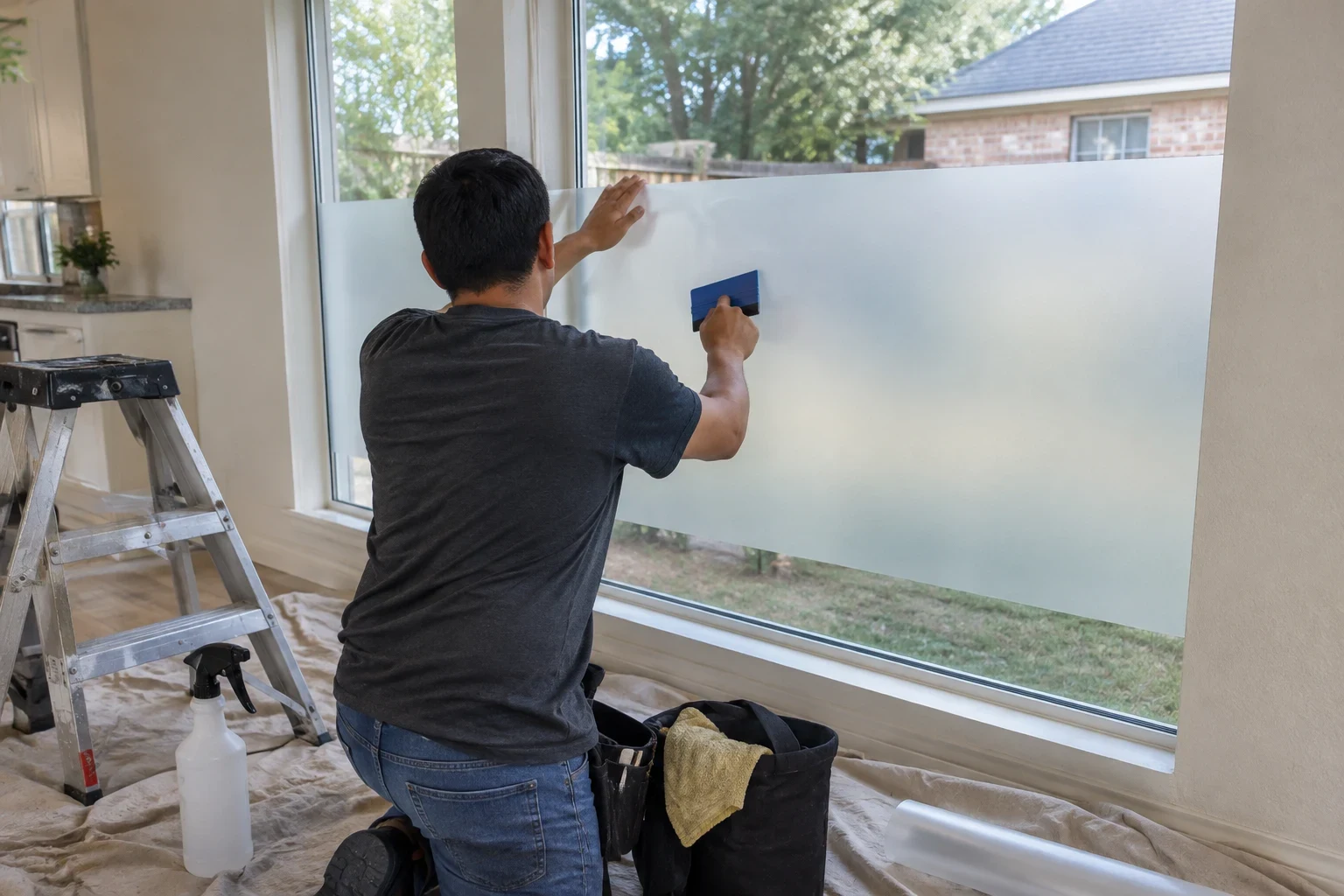
Turf protection window film changes how that glass reflects. It scatters or cuts the outgoing reflection so the light hits the ground spread out instead of focused. You keep the window, you keep the low-E benefit inside, and the burn line on the lawn stops growing.
We look for the cheapest fix that works first. Most of the time that's film on one or two panes, not new windows, awnings or a different turf product. If film won't solve it, we'll tell you that and why.
What the job includes
Finding the source window
We match the melt pattern to the sun's path and the glass around it. Burn lines often move with the season, so we look at the angle, not just the closest window.
Checking the glass
We look at the pane type, any visible bowing and the condition of the seals. A failed seal or fogged unit changes what we recommend.
Picking the right film
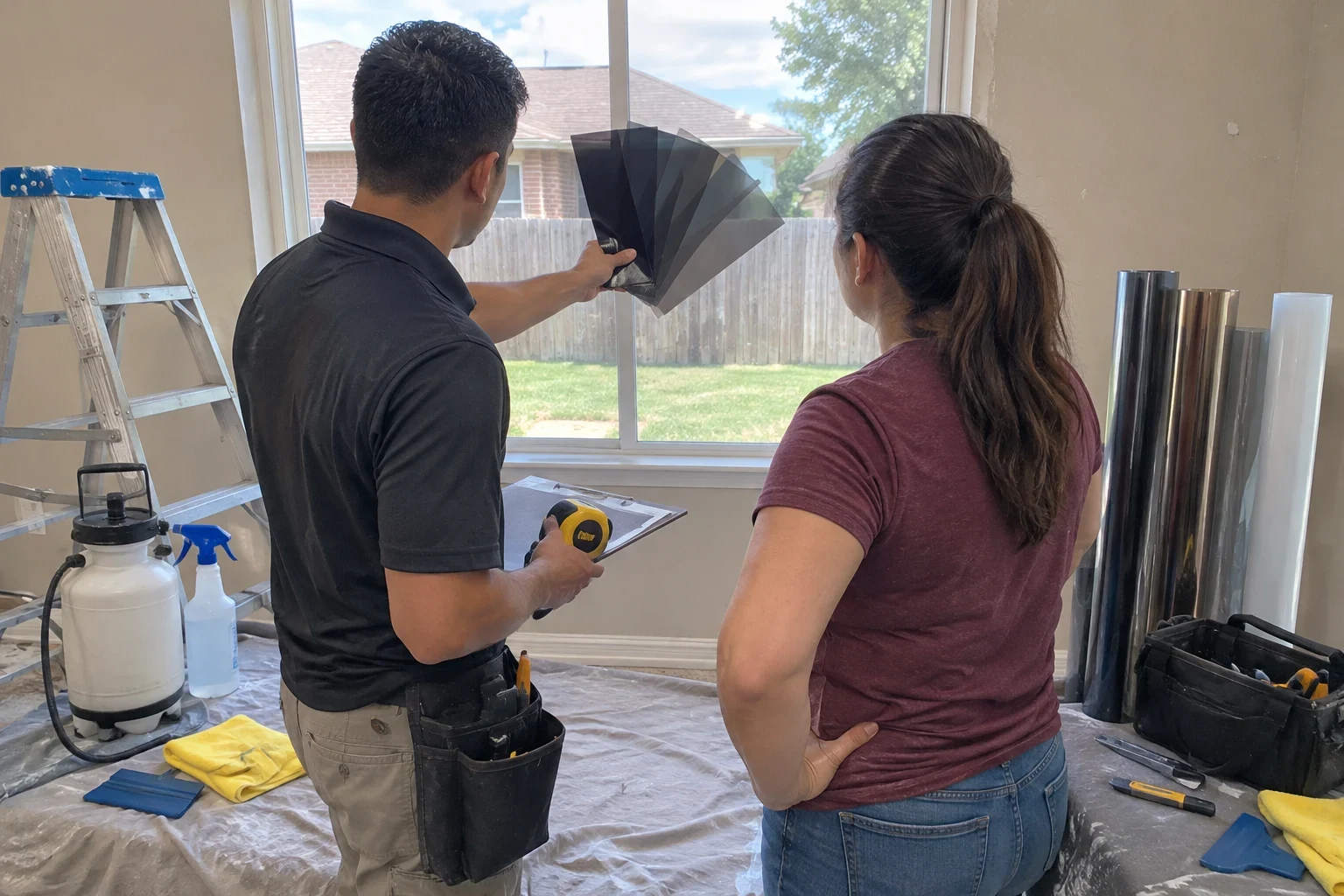
Turf films are made to diffuse or reduce exterior reflection. We choose one that fixes the hot spot without making the window look odd from the yard.
Careful installation
We clean the glass, cut the film to the pane and squeegee out water and air. We protect the sill and floor and pick up our scraps before we leave.
A follow-up look
We tell you what to watch for on the next few sunny days so you can confirm the hot spot is gone.
Signs a window is damaging your turf
- A shiny or matted streak
- Melted fibers flatten and turn glossy. It usually shows up as a curved or straight band, not a random patch.
- Damage that follows the sun
- If the spot sits a few feet out from a wall of windows and shifts over the months, reflection is the likely cause.
- Hot ground in one spot
- The turf feels much hotter in one band than a step away. Kids and pets may avoid that area.
- Scorch marks nearby
- Melted vinyl siding, warped trim or a scorched patio cushion near the same windows points to the same problem.
- New turf near new windows
- Damage that started right after a window replacement or a new turf install is a common pattern with low-E glass.
How a turf film job runs
- 1
Phone consultation
You describe the damage and where it sits. We set a time to come out, and the consultation is free.
- 2
Site visit
We trace the reflection back to the glass, check the panes and explain what we'd do. You get a written quote before any work.
- 3
Install day
Most jobs cover a few panes and take part of a day. We prep the glass, apply the film and clean up.
- 4
Cure and check
The film needs a few weeks to fully dry. You'll see the reflection soften right away, and any light haze clears as it cures.
What moves the price
Turf film is usually a small job because only the offending panes need it. The price depends on how many windows are involved and how easy they are to reach. We quote it per job after we see the glass, with no surprise add-ons.
- Number of panes
- Sometimes one pane causes the whole problem. Other times a full bank of windows needs film to stop a long burn line.
- Window size and height
- Large sliders and second-story glass take more film and more setup. Ladders and lifts add time.
- Film type
- Diffusing and reduced-reflection films are priced differently. We'll explain which one your glass needs.
- Glass condition
- Old film to strip, hard water spots or a failed seal can add prep work or change the plan.
Turf film questions
- Do I have to replace my windows to stop the melting?
- Almost never. The window is doing its job of reflecting heat, it's just aiming it at the lawn. Film on the right panes fixes that for far less than new glass. If a unit has a failed seal or is already fogged, we'll tell you replacement may make more sense for that pane.
- Will the film change how the window looks from inside?
- Most turf films are subtle. You may notice a slight frosted or muted look on the treated panes. We'll show you samples so there are no surprises.
- What if the reflection is coming from my neighbor's house?
- That happens a lot. We can show you which window is causing it. Film can only go on that window with the neighbor's okay, so many people bring them into the conversation, and we're glad to explain the fix to them.
- Can you repair the turf that's already melted?
- We don't repair turf. Our job is stopping the reflection so new damage doesn't happen. Once the film is up, your turf installer can patch the damaged strip without it melting again.
- Do you do this for businesses with artificial turf?
- Yes. Offices, schools and play areas with synthetic grass run into the same problem. Commercial jobs are covered by our 15-year warranty on commercial window tinting, and we've been doing this work for 8 years with insured installers.
Let's find the window that's doing it
Tell us where the damage is and we'll come trace the reflection. Serving Richmond and nearby towns like Sugar Land, Rosenberg and Fulshear.