ServicesHome Window Tinting
Home Window Tinting in Richmond, TX
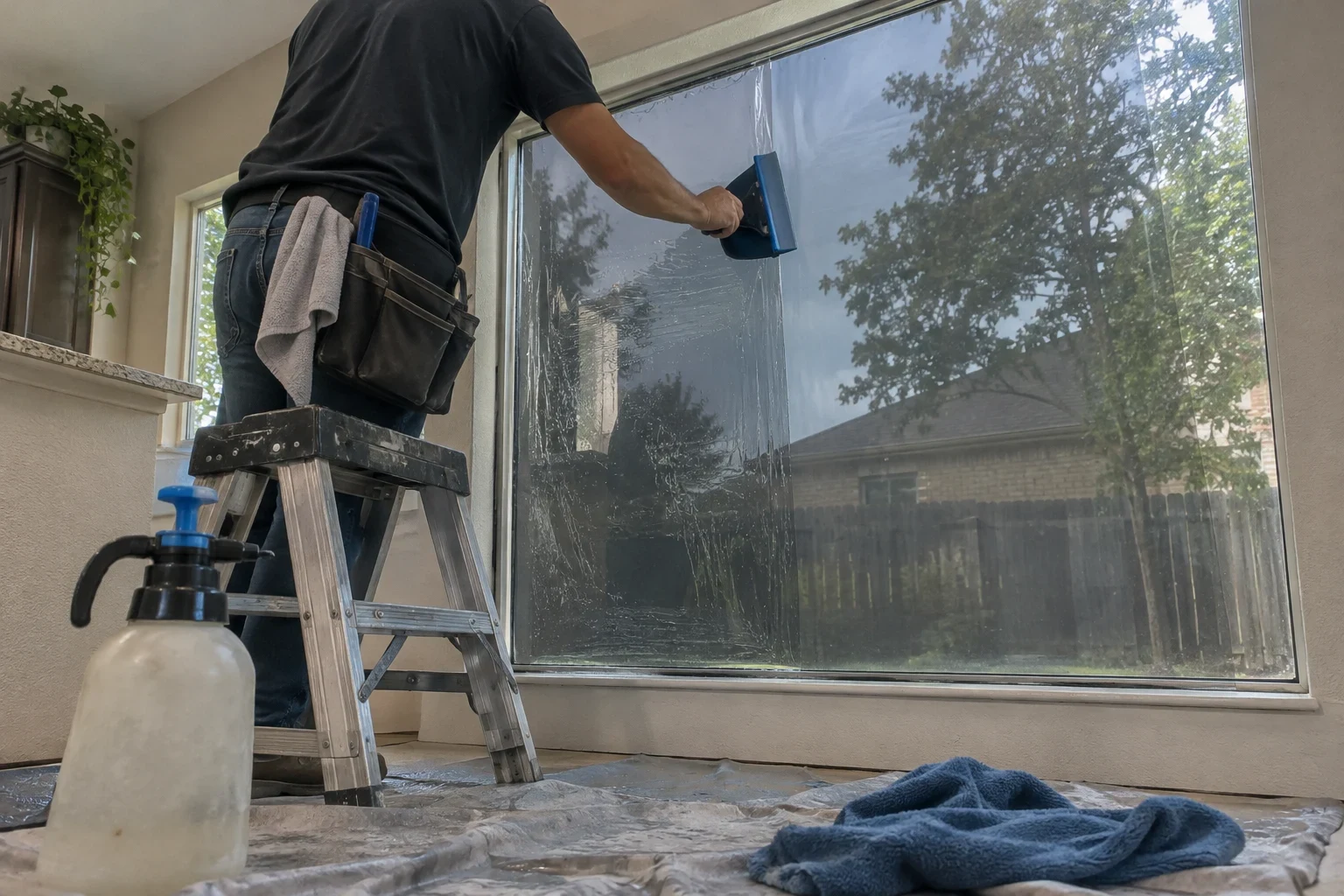
We put window film on the glass you already have, so hot rooms cool down, glare leaves your TV screen and sunlight stops bleaching the floors. If you have old film, we tell you whether it can stay or should come off.
What Home Window Tinting Does for Your Rooms
Window film is a thin layer applied to the inside of the glass. A good film rejects a large share of the sun's heat, blocks almost all UV light and cuts glare, while you still see out clearly. You keep your windows. You just change how much sun gets through them.
In a Texas summer, the rooms that face west or south take the worst of it. Those are usually the windows we start with. We don't push film on every pane in the house when two or three windows are causing the problem.
If you already have tint, we look at it first. Film that is only scratched in one spot or lifting at a corner on one window does not mean the whole house needs redoing. We have been doing this work for 8 years, and the honest answer is often smaller than people expect.
What Our Home Tinting Work Includes
- A look at every window in question
- We check the glass type, the frame and which way each window faces. Dual-pane and low-E glass need a film that won't add too much heat stress, so we match the film to the glass.
- Film choices explained in plain words
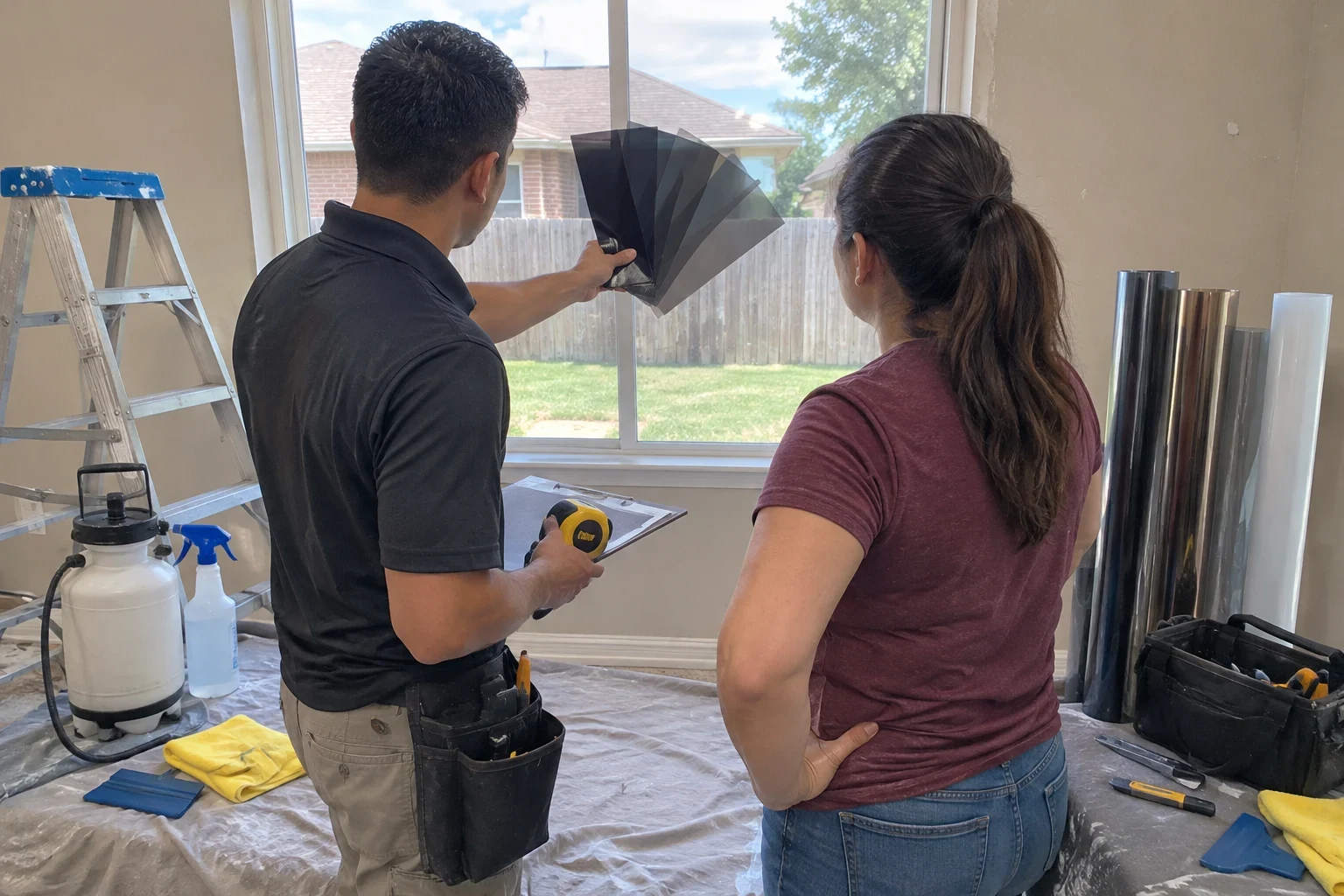
- We show samples in your own light. You'll see the difference between a dyed film, a ceramic film and a light reflective one, and what each does for heat and view.
- Removal of failed old film
- Purple, bubbled or peeling film comes off by steaming and scraping, then the glass gets cleaned of old adhesive. We only strip the windows that need it.
- Careful installation
- Our installers are insured. We lay drop cloths, move what needs moving, and trim the film to fit the glass edge.
- Cleanup and care notes
- We wipe down the glass and sills and take the scraps with us. You get simple instructions on curing time and cleaning.
Signs Your Windows Need Tint or a Fix
One room is always hotter
If the AC runs and a bedroom or living room still feels warm in the afternoon, the sun through that glass is often the cause.
Glare on screens and counters
You close the blinds every afternoon just to watch TV or work at the kitchen table. Film cuts the glare and lets you keep the blinds open.
Fading floors and furniture
Rugs, wood floors and couch fabric lose color where the sun hits. Most of that damage comes from UV light, which film blocks.
Old tint turning purple or bubbling
That's the dye or adhesive breaking down. Sometimes it's a few panes and we redo just those. If it's most of the house, we tell you that too.
Peeling at the edges
A lifted corner on newer film can sometimes be addressed without replacing the whole sheet. Older brittle film usually needs to come off.
How a Tinting Job Goes
- 1
Phone call and consultation
You call, tell us which rooms bother you, and we set a time to come out. The consultation and quote are free.
- 2
Measure and recommend
We measure each window, check the glass and any old film, and give you a written quote broken down by window. If repair makes sense, that's what we recommend.
- 3
Install day
Most houses are done in a day. We clean each pane, apply the film with a slip solution, squeegee it flat and trim the edges.
- 4
Curing
You may see small water pockets or haze for a few days to a few weeks. That clears on its own as the film dries. Wait about a month before washing the inside of the glass.
What Moves the Price of Home Window Tinting
Every house has a different mix of windows, so we count panes and match film before we put a number on anything. The written quote breaks the job down window by window, and you can drop any of them before we start. We can't give a fair figure until we've seen the glass in person.
- Amount and size of glass
- More square footage means more film and more time on the squeegee. Tall living room windows and sliding doors take longer than standard bedroom windows.
- Type of film
- Ceramic film costs more than dyed film but rejects more heat without making rooms dark. If a basic film will handle your problem, we'll say so.
- Old film removal
- Stripping failed tint and scraping off its adhesive adds labor. Doing that on a few windows runs far less than taking it off the whole house.
- Access
- Second-story windows, glass above stairs or panes blocked by built-ins need ladders or extra care.
Home Window Tinting Questions
Something not covered here? (281) 549-2758
Will tint make my house dark inside?
Not if you pick the right film. Many ceramic and light films are close to clear and still cut a lot of heat. We bring samples so you can see the shade against your own windows before you decide.
Can film go on dual-pane or low-E windows?
Yes, in most cases. The film just has to be matched to the glass so it doesn't trap too much heat in the pane. We check the glass type before we recommend anything.
My old tint is bubbling on two windows. Do I need to redo the whole house?
Usually not. If the rest of the film is still clear and holding, we strip and redo only the bad windows. We'll be straight with you if the rest is close to failing too.
Do you work outside Richmond?
Yes. We do home tinting in Rosenberg, Sugar Land, Fulshear, Missouri City and other nearby towns. Our Service Areas page lists them.
Will tint help with privacy?
Some films make it harder to see in during the day. At night, with lights on inside, most films won't hide much. For rooms where privacy matters most, see our Privacy Window Tinting or Decorative Window Tinting pages.
Find Out What Your Windows Really Need
We'll look at the hot rooms, check any old film, and tell you what's worth fixing and what's worth replacing. The quote is free and there's no pressure.