ServicesCommercial Window Tinting
Commercial Window Tinting in Richmond, TX
We put window film on storefronts, shops, clinics and small commercial buildings. The goal is simple: less heat at the front counter, less glare on screens and displays, and stock that doesn't fade in the window. We fix only what needs fixing and tell you straight when a full redo makes more sense.
What commercial window film does for a business
Big panes of glass let in a lot of sun. That means a hot sales floor, a front desk nobody wants to sit at, and products on display that bleach out in a season. Commercial window film goes on the inside of the glass and blocks much of that heat and nearly all of the UV.
A lot of the buildings we see already have film on them. Some of it is fine and just has a few bubbled or scratched panes. Some of it is purple, peeling and past saving. We look at it pane by pane. If a handful of panels can be stripped and redone, that's what we quote. If the whole storefront has failed, we show you why and price a full replacement.
We've been doing this work for 8 years, and our installers are insured, so you're covered while we're working in your space.
What the job includes
Walkthrough and glass check
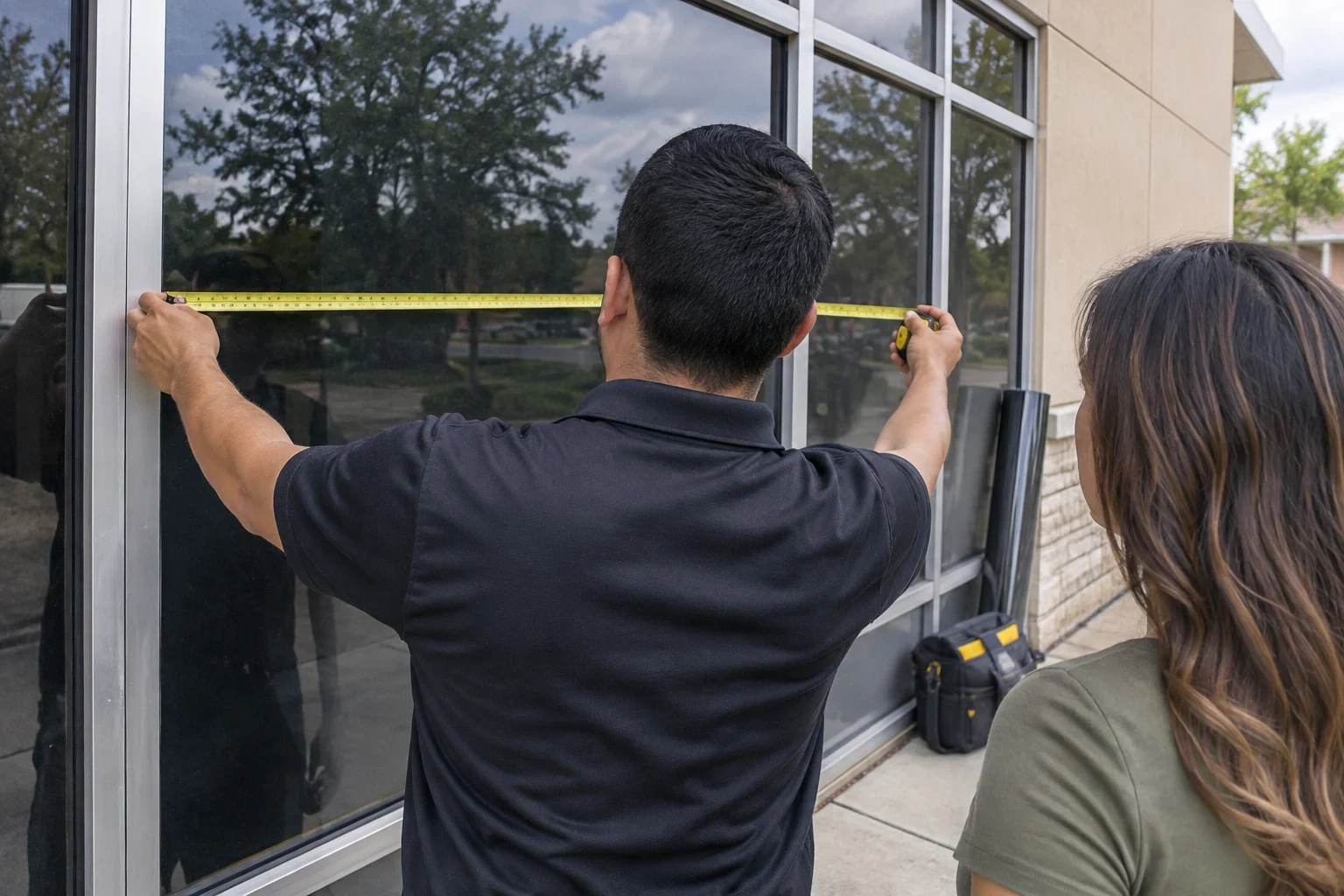
We look at every pane, note which way it faces and check the glass type. Some insulated and tinted glass needs a specific film to avoid heat stress cracks, so we check before we recommend anything.
Film matched to the space
A retail window needs clear sight lines for customers. A back office may want more shade. We may suggest ceramic window film where you want heat rejection without a dark look, or reflective window film where daytime privacy matters more.
Removal of failed film
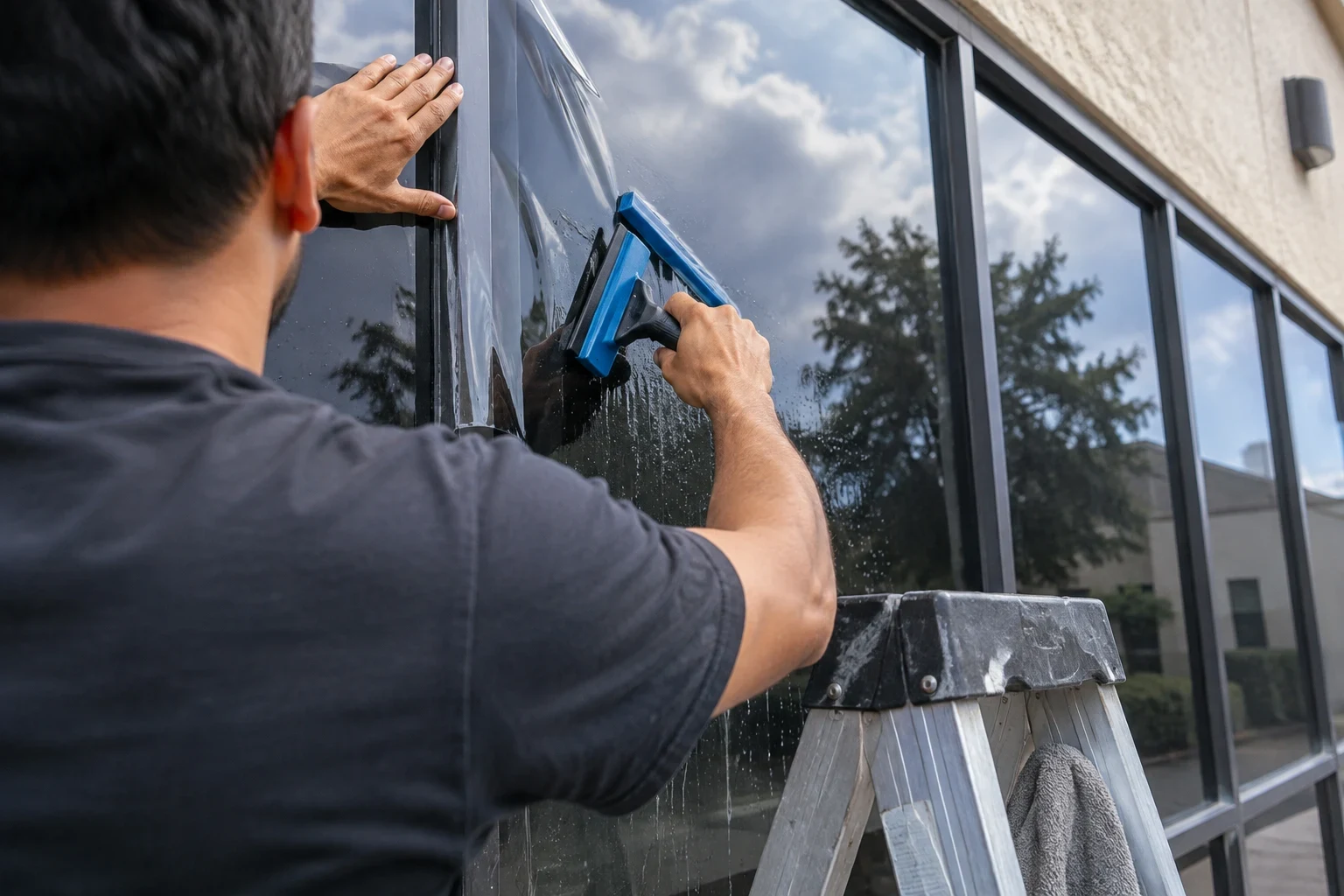
Old film comes off with steam and scrapers, and we clean the adhesive down to bare glass. New film will not stick right over old glue.
Clean, careful install
We drop cloths, move only what we need to, and trim each edge tight to the frame. Cleanup is part of the job.
Written warranty
Our commercial window tinting carries a 15-year warranty, and we walk you through what it covers before we start.
Signs your building could use film
- Hot spots near the glass
- Staff move their chairs or the AC runs hard on one side of the building all afternoon. West-facing glass in Texas heat is usually the reason.
- Faded merchandise or signs
- Clothing, packaging and printed displays lose color fast in direct sun. UV protection slows that way down.
- Glare on screens
- Customers squint at the register, or your team tilts monitors to see them. Film cuts glare without blacking out the view.
- Old film bubbling or turning purple
- That's dye breaking down and adhesive letting go. Sometimes only a few panes need redoing, and we'll say so.
- People can see too much
- Back rooms, break areas or stock stored near the window are on display. A darker or frosted film fixes that.
How a commercial job runs
- 1
Free consultation by phone
You tell us about the building and the problem. We set a time to come look.
- 2
On-site look and written quote
We measure, check the glass and any old film, and give you a line-item quote. It shows what we'd repair and what we'd replace, so you can decide.
- 3
Install around your hours
We can work early, late or in sections so you stay open. Most storefronts are done in a day or two.
- 4
Final check and care notes
We walk the job with you. Film can look a little hazy for a few days while it cures, and that clears on its own. Wait about a week before cleaning the glass.
What moves the price
Every building is different, so we quote after we've seen the glass. The price comes down to how much film goes up, which film it is, and what we have to deal with first. You'll get it in writing before any work starts.
- Square footage of glass
- More panes and bigger panes mean more film and more labor.
- Film type
- Ceramic film costs more than dyed or standard reflective film, but it rejects more heat while staying lighter.
- Old film removal
- Stripping baked-on film and glue takes time. Redoing a few panes costs far less than stripping the whole front.
- Access and height
- Ground-floor windows are simple. High transoms, clerestory glass or anything needing a lift adds time.
- After-hours scheduling
- Working outside your business hours can change the schedule and the crew time involved.
Commercial window tinting questions
- Will we have to close while you work?
- Usually not. We can work in sections, before opening or after close. We'll plan it with you on the walkthrough.
- Can you just fix the bad panes instead of redoing everything?
- Often, yes. If the rest of the film is in good shape, we strip and redo only the failed panes and match the look as close as we can. If most of it is failing, we'll show you and explain why a full redo makes more sense.
- Will customers still be able to see in?
- Yes, if that's what you want. Light ceramic and non-reflective window film cut heat and glare while keeping your displays visible from the street.
- Does film help with energy bills?
- It lowers the heat coming through the glass, so your AC doesn't have to work as hard on sunny sides. How much you save depends on the glass, the direction it faces and your system. We won't promise a number we can't back up.
- How long does commercial film last?
- Quality film lasts many years on the inside of the glass. Ours comes with a 15-year warranty on commercial window tinting, and we explain the terms up front.
Let's look at your glass
Tell us what's going on with the building and we'll set up a time to see it. You'll get a straight answer on repair or replacement and a written quote.